Why ELDOA and Yoga Are Not the Same: What You Need to Know About Spinal Health
Discover why ELDOA is not yoga. Learn how this unique spine-decompressing technique can relieve pain, improve posture, and enhance your yoga practice. Created by osteopath Dr. Guy Voyer, ELDOA is a game-changer for joint health and longevity.ELDOA vs. Yoga – What’s the Difference?
Yoga is a well-known and beloved practice that supports flexibility, strength, mindfulness, and stress relief. But many people mistakenly think that ELDOA is “just another kind of yoga.” Spoiler alert: it’s not.
While both involve posture, body awareness, and breath, ELDOA and yoga serve completely different purposes. They are complementary, not interchangeable.
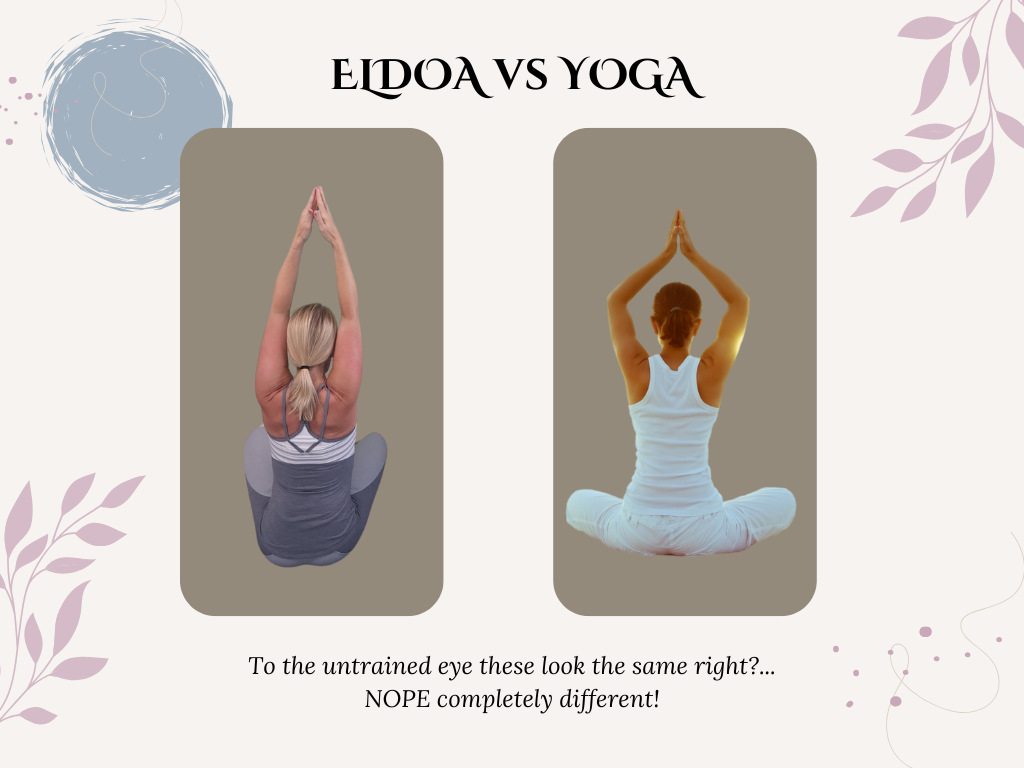
If you’ve ever looked at an ELDOA posture and thought it looked “just like yoga,” you’re not alone. But here’s what makes ELDOA revolutionary—and how it can transform your spine, your posture, and your daily life.
Quick Tip: Try implementing these exercises early on to maintain the stability of your pelvis throughout your entire pregnancy.
Real-Life Example: If you sit at a desk all day and suffer from low back pain, a specific ELDOA posture for L5-S1 can relieve pressure in minutes and leave you feeling taller, looser, and more energized.
- Creates space in specific joints (like L5-S1 in the spine)
- Relieves disc and nerve pressure
- We say decoapts the spine (which means to create space)
- Enhances posture, mobility, and body awareness
- Engages the fascia and internal pressure systems
What is Yoga?
- Improves flexibility and strength
- Enhances mental clarity and relaxation
- Reduces stress and anxiety
- Encourages spiritual growth and connection
Real-Life Example:
After a long, stressful day, a 30-minute yoga flow can help calm your nervous system, stretch tight muscles, and leave you feeling balanced and grounded. It can also provide strength and stability to your overall musculature
ELDOA vs. Yoga: The Key Differences
| Feature | ELDOA | Yoga |
| Main Goal | Spinal decompression and joint space | Mind-body connection and holistic health |
| Movement Type | Specific, static joint-focused postures | Flowing or static sequences for whole body |
| Focus Area | Spine, joints, fascia, and organ pressure | Flexibility, strength, energy flow |
| Time Required | 1–2 minutes per posture | 15–90 minute sessions |
| Spiritual Component | None | Integral to many forms |
| Breathwork | Supports postural alignment | Core component |
| Best For | Injury recovery, pain relief, posture correction, longevity | Stress relief, mindfulness, overall wellness |
| Developed By | Dr. Guy Voyer (France) | Ancient Indian tradition |
Exercise Idea: If one of the positions you want to attempt to give birth is on all fours, then you should be practicing that position and building strength there to support you so you can maintain the position for an extended period of time.
You can also use a birthing ball in this position as well to help hold you up.
Why People Think ELDOA Is Yoga
- ELDOA postures are anatomically precise.
- They are designed to decompress a specific joint, not create general flow or flexibility.
- ELDOA requires trained guidance to correct compensations and get maximum results.
For example, two people might look like they’re doing the same pose—but only the ELDOA-trained instructor can cue you to engage the correct fascial lines, manage internal pressure, and get true decompression.
How ELDOA Can Improve Your Yoga Practice
If you’re already doing yoga, adding ELDOA to your routine can help you:
- Prevent injuries
- Deepen your poses with better alignment
- Recover faster from soreness
- Correct long-term posture issues holding you back
Example: Let’s say you’re experiencing SI joint pain or a disc issue. A yoga sequence might relieve the tension temporarily. But ELDOA can target the exact vertebral level causing the problem and create real structural change.
Why ELDOA Is a Game-Changer
ELDOA Works On:
- Spinal decompression
- Postural alignment
- Fascial balance and hydration
- Internal pressure regulation
- Deep core activation
Top Benefits of ELDOA:
- Relief from chronic pain (back, neck, hip, shoulder)
- Better posture and alignment
- Increased flexibility and mobility
- Strengthened core and stability muscles
- Improved circulation and energy
- Long-term joint health and injury prevention
- A taller, more open and relaxed feeling in your body
Real Talk: Multiple clients even had clients grow taller by the time of their annual checkups—just from practicing ELDOA regularly.
Final Thoughts: Not All Movement Is Created Equal
Whether you’re:
- Dealing with back pain or disc issues
- A yoga teacher wanting better posture
- Or just trying to age pain-free…
Ready to Experience ELDOA?
At Align Movement, I help people who are tired of chasing the same pain, restriction, or movement problem finally start connecting the dots.
Whether you’re dealing with chronic back or hip pain, recovering from pregnancy or surgery, struggling to return to the activities you love, or simply feel like you’ve tried everything and something is still being missed, my approach looks beyond the area that hurts to understand how your body is functioning as a whole.
I offer personalized whole-body care and coaching that combines Osteopathic Manual Therapy, ELDOA, movement restoration, and my signature Back to B.A.S.I.C.S. Method. Care is available through hands-on treatment at the Jersey Shore, personalized online coaching, or a hybrid approach that brings both together.
Because your back isn’t just a back. Your hip isn’t just a hip. And the place you feel pain isn’t always the whole story.
Your body is connected. Your care should be too.
Rachael Van Schoick is an Exercise Specialist, Licensed Massage Therapist, SomaTrainer, Level 4 ELDOA Trainer, and Birth Doula specializing in a whole-body approach to pain, movement, and recovery. She is one of only three practitioners in New Jersey trained in this specialized style of Osteopathic Manual Therapy and has spent nearly a decade helping clients move better, understand their bodies, and get back to the lives they want to live.